Orthopaedic procedures
Invermay Vet Clinic is proud to be able to offer specialised orthopaedic surgeries at very competitive prices. This includes bone and ligament repairs in dogs and cats.
Our surgeon, Dr Darren Taylor, has been performing orthopaedic surgeries for over 20 years and has done well over 50 TPLO procedures and hundreds of fracture repairs.
We offer fixed-fee packages that include all standard follow-up visits, pain medication, and xrays (for some procedures). Complications are rare, but can incur extra charges if further interventions are required.
Cruciate ligament repair
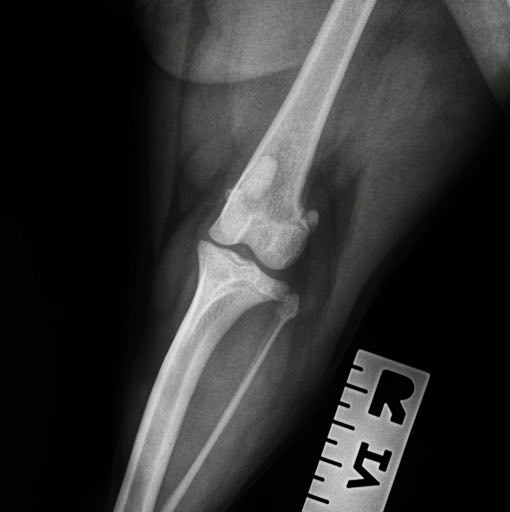
The knee joint has two cruciate ligaments running though it to keep it stable and aligned when bending to walk, run, and jump. These are the cranial cruciate (CCL or ACL) and the caudal cruciate ligaments.
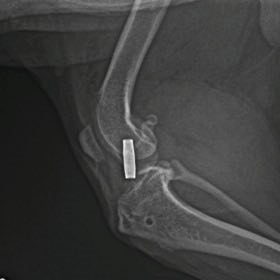
A very commom injury in dogs is the partial or complete tearing of the cranial cruciate ligament. It can happen when doing regular things like jumping, running, or playing. This rupture, or tearing, causes the knee joint to become unstable and extremely painful. In addition to the ligaments tearing, the cartilage (or meniscus) that cushions the bones can tear at the same time or over time if the ligaments are not repaired. If left untreated, the bones in the joint make contact and develop degenerative osteoarthritis, even in young dogs. This is very painful and cannot be reversed.
If you suspect a cruciate ligament injury in your dog, it is best to book in to see us. It is possible that the joint is too painful and the muscles too tense to assess in a consultation. In this case, sedation and xrays may be required.
Surgical repair as soon as possible is recommended for any dog with cruciate ligament injuries. Repair will ensure that further, lasting damage is minimised and the pain is relieved.
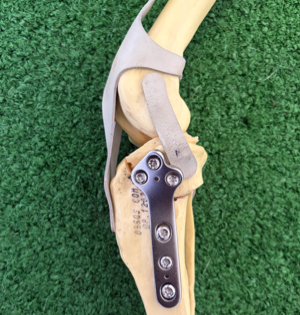
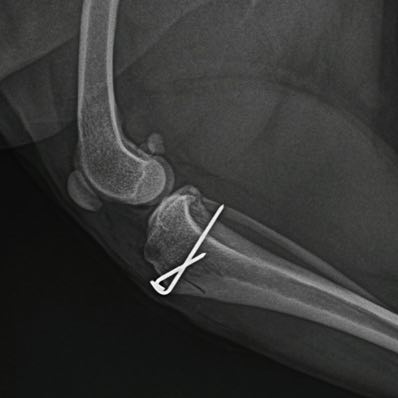
We offer two surgical procedures for repairing cruciate injuries. The choice generally depends on the weight of the dog, but there are a number of factors that the vet will discuss and guide you through.
Luxating patella
It may not look like it, but dogs also have knee caps. In some dogs, the knee cap does not stay in it's place, where it normally sitting in a groove in the femur bone. This condition is very common in small and toy breeds and can often be identified by a skip or hop of the back leg when the dog is walking or running. In more severe cases there is lameness, swelling, and pain. Sometimes the dog's leg goes temporarily straight and stiff as the leg is unable to bend when the patella is out of place.
Broken bones
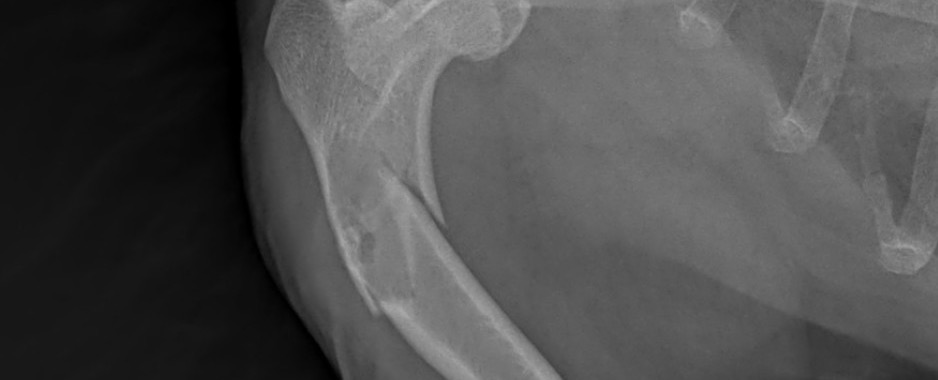
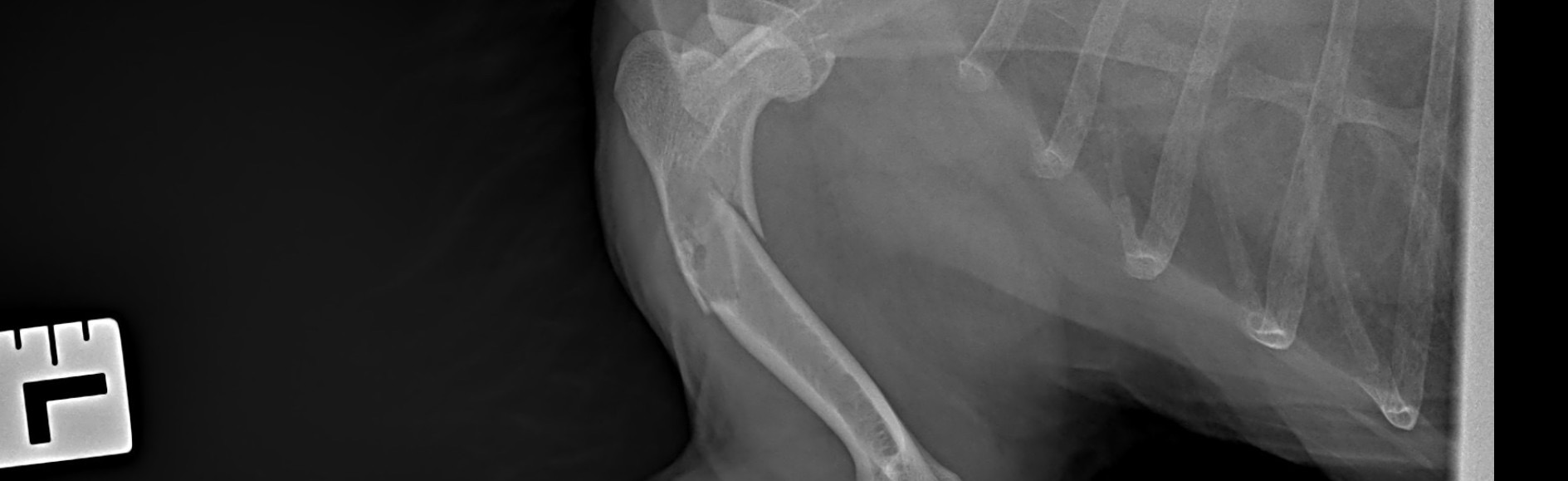
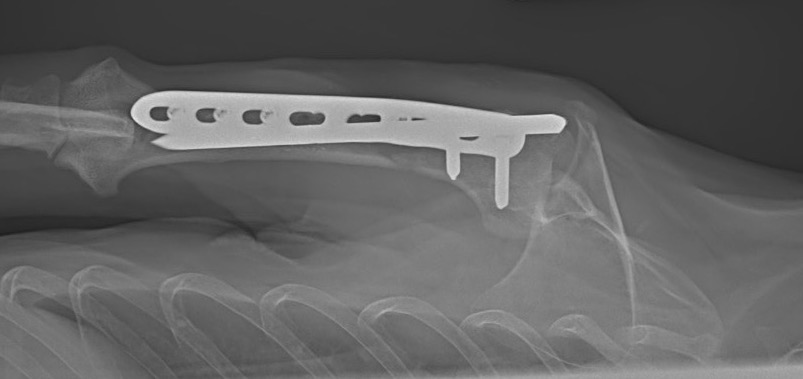
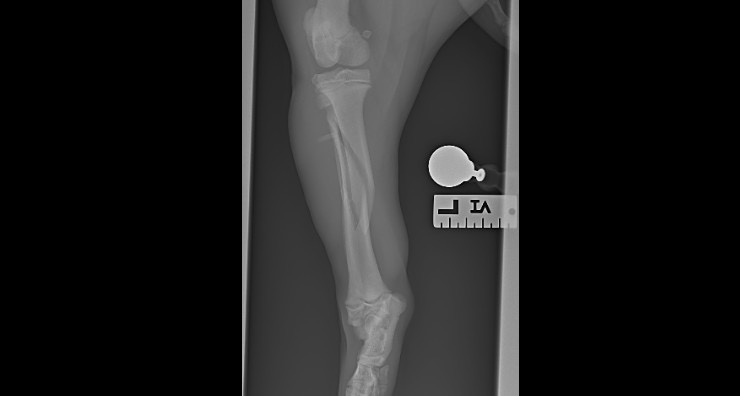
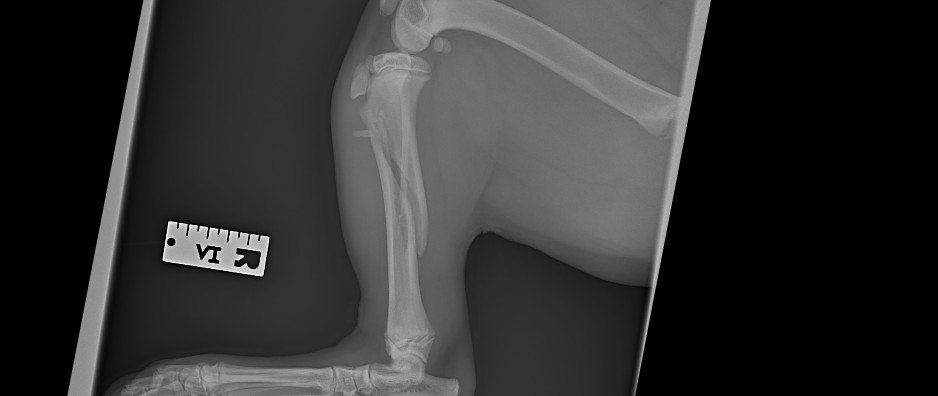
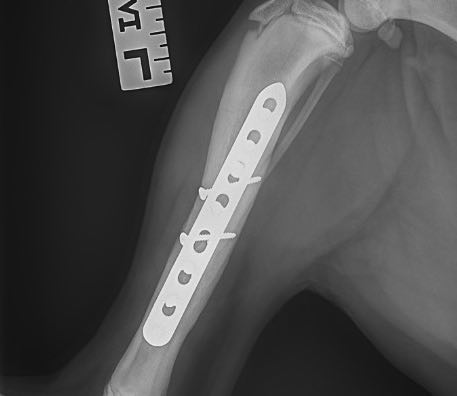
Bone fractures, or breaks, are normally the result of force trauma - a vehicle accident, landing badly in a big jump, from a dog fight, or any number of other accidents that leave your pet in serious pain and at risk of life-long deformities that affect their lives. Fracture repairs are intended to return bones, as much as possible, to their original shape and function. This might involve the use of pins, screws, plates, and other prosthetics to brace the bone while it heals, as well as suturing of tendons and ligaments, or fusing of joints.
Other procedures
Orthopaedics involves treatement of the entire musculo-skeletal system of bones, joints, ligament, tendons, and muscles. Surgery can be used to treat many different issues, but is often only one of a number of treatment options. We offer femur-head amputations, limb amputations, bone fusions, repairs, and a host of non-surgical interventions.